Persuasive Speech
“A prison is any place of involuntary confinement and restriction of liberty.” (Public opinion)
Today, the education system is causing considerable damage in all fields of our society, and the root of the issues is the education system’s deficit. Our current system limits students’ success; the system chooses what people need to learn and how to learn.
Some people describe part of their life as a prison, marriage, work, and a sign of failure in our goals. A recent study of America’s Promised Alliance by Alma Powell shows that 30% of high school students fail graduation, and according to the New York Times, 80,000 of the nation’s 100,000 public schools received failing grades in 2010; if we compare it with our neighbor Canada, the 93% high-school students get their diplomas every year. Who is responsible for this silent situation? Do you think we have an excellent public system? Let me tell you how our current educative system is accountable for our social problems, is the responsibility of our concept of fake democracy / true democracy, and most importantly, is responsible for inhibiting our critical thinking. The world is changing, but our society and schooling aren’t.
Let’s start from the beginning and know how we arrived here; during the late eighteenth century, western societies experimented with the changes from a monarchy government to a republican form. Western societies changed their schooling system to face those changes and implemented mass education. This industrial educational system peaked in the nineteenth century during the economic competition of the countries, and the rise of mass schooling in the twentieth century aimed to train the citizen for the modern industrial state. Our social problems are becoming more problematic because our economy is not industrial anymore, and our society doesn’t need more mass workers. The governments adopted this system to maintain an organized community; it means obedient citizens who adopt radical patriotic postures like the one described by Ida Blechman, “my country, right or wrong.” These standards exist in religion, nation, politic, and culture.”
Social Issues.
My speech goes beyond the last chapters of violence, racism, or ideologies that we saw last year, in the previous ten years, and during the last hundred years. School is a business where political, social, and economic powers are interested. Different critics of education worldwide, like Francisco Ferrer, Maria Montessori, or Loris Malaguzzi, agree that political power doesn’t must interfere in the ideology of schools, and mass education is a way of political control. Radical schooling critics are concerned about the structure of middle-class families because not all children arrive at school with the same background and tools. If we add the stratification and segregation generated by the current system, we are creating booms that will explode soon. Wealthy families have more education than low-income families, and this fact is creating more social divisions. This division and new technologies are declining local community life and local businesses; this decadence is related to the monotonous and boring work we were trained for without personal satisfaction.
Democracy.
We learn that democracy means “go and vote,” but we didn’t learn to go, interact, and participate in the problems of your community. I want to cite the words of Harry Kelly, director of the Modern School in New Jersey; he wrote in the 1920s, “The school prepares the individual for this society by assuming responsibility for the child. By attempting to teach automobile driving, sex education, dressing, adjustment to personality problems, and a host of related topics, the school also teaches that there is an expert and correct way of doing all of these things and that one should depend on the expertise of others. Students in the school ask for freedom; they receive the lesson that freedom is only conferred by authorities and must be used “expertly.” The methodology and curriculum delivered the message, so it means that if we review the space, groups, time, and governance of our educative system, we can give back the freedom to our children and our citizens, in general, to choose, in a couple more elections ahead, better rulers from better options.
Critical thinking.
People avoid critical thinking because we learn from school that getting a good grade is enough. We experience from school learning that meritocracy and recognition will lead us to success, and bad scores hide a child in the shadow of education and lead him to procrastination in their life. Liberal educators don’t test students to avoid competition and individualism.
By the conventional teaching method, the pupil learns maps instead of the world but thinks critically; pupils must feel motivated to share their ideas or questions and realize a right or wrong answer. Right now, with a bit of information, a student can do a good performance in their tests; the process of getting that knowledge brings anxiety but not creativity. The current system develops health problems in students; teachers from public schools recommend that children’s parents visit doctors and ask for medication for ADHD disorder. Children of two or three years old are prescribed one or two drugs; at nine, they are taking eight or nine medicaments. 23% of children are prescribed bipolar disorder in the United States; it is a high number, but why is this happening? Because our society teaches us that there is no room for losers, you are out of the game if you don’t fit. So pharmaceutics has many drugs to fight ADHD disorders; they are tools used by the government to control children out of that pattern created by the system. Those children can be prominent critics or tinkers that can put this system in danger, so it is better to control them since they are babies. If you were lucky and you didn’t have those kinds of educators that sent children to doctors, but even that, you failed, or you didn’t fit because you were different or not too good as other guys; let me tell you that you didn’t fall, that educative system didn’t suit your abilities and skills, but there are not too many options in the public education, and not too many information available for our parents and mentors.
Educative systems like the called “Progressive” bring ideas and methodologies to create more democratic societies with parents and
The essence of this philosophy is “respect;” each individual must be recognized by their abilities and not for tests and scores—respect for diversity of beliefs and cultural identity. More social engagement to understand betters a community.
Progressive education is related to the social Reconstructionist approach. Advanced education has existed in America since the early twenty century, and art and creativity were fundamental in their curriculum. William Kilpatrick and other students from Colombia University decided to spread Progressive education to many different teachers and school leaders. They researched to demonstrate that “students from progressive high schools were capable, adaptable learners and excelled even in finest universities.” One hundred years ago, after the IIWW and the cold war, a new generation of educators and activists was exploring different alternatives to face the new postmodern age and the new social issues of our generation.
The first step This is already done, and now we need to create a public school with an open curriculum with space for creativity and freethinking activities. Next, we need to reconceptualize and reorganize schools from our mentality and architecture—a dialogical school with interactive classes, community relations, and democratic and less authoritarian rules.
Citations
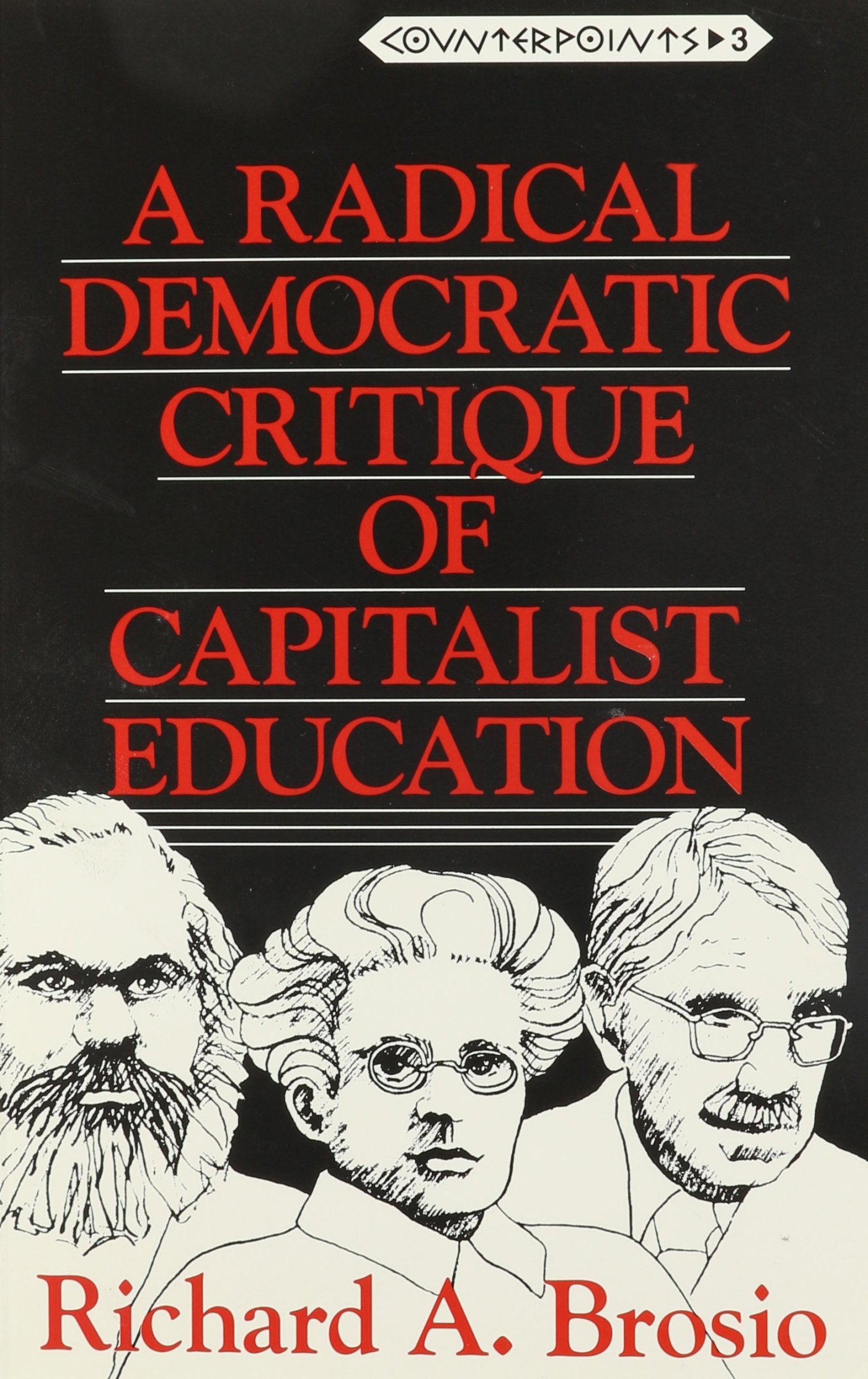
Blechman, Ida. The Radical Critique of Schooling.
Emilie Gaiqui – A Brief Overview of Progressive Education During most of the twentieth century.
Ron Miller – The Self-Organizing Revolution.
 Vera Academic Research
Leave a comment